You can be doing everything right in a business and still feel broke.
Sales are decent, clients are happy, the P&L says you're winning. Then you check the account balance and... wait, where did it all go?
It didn't go anywhere. That gap is almost always a timing problem, not a profit problem, and knowing how to improve cash flow beats sitting around waiting for a better month.
1.Invoice the second the work's done
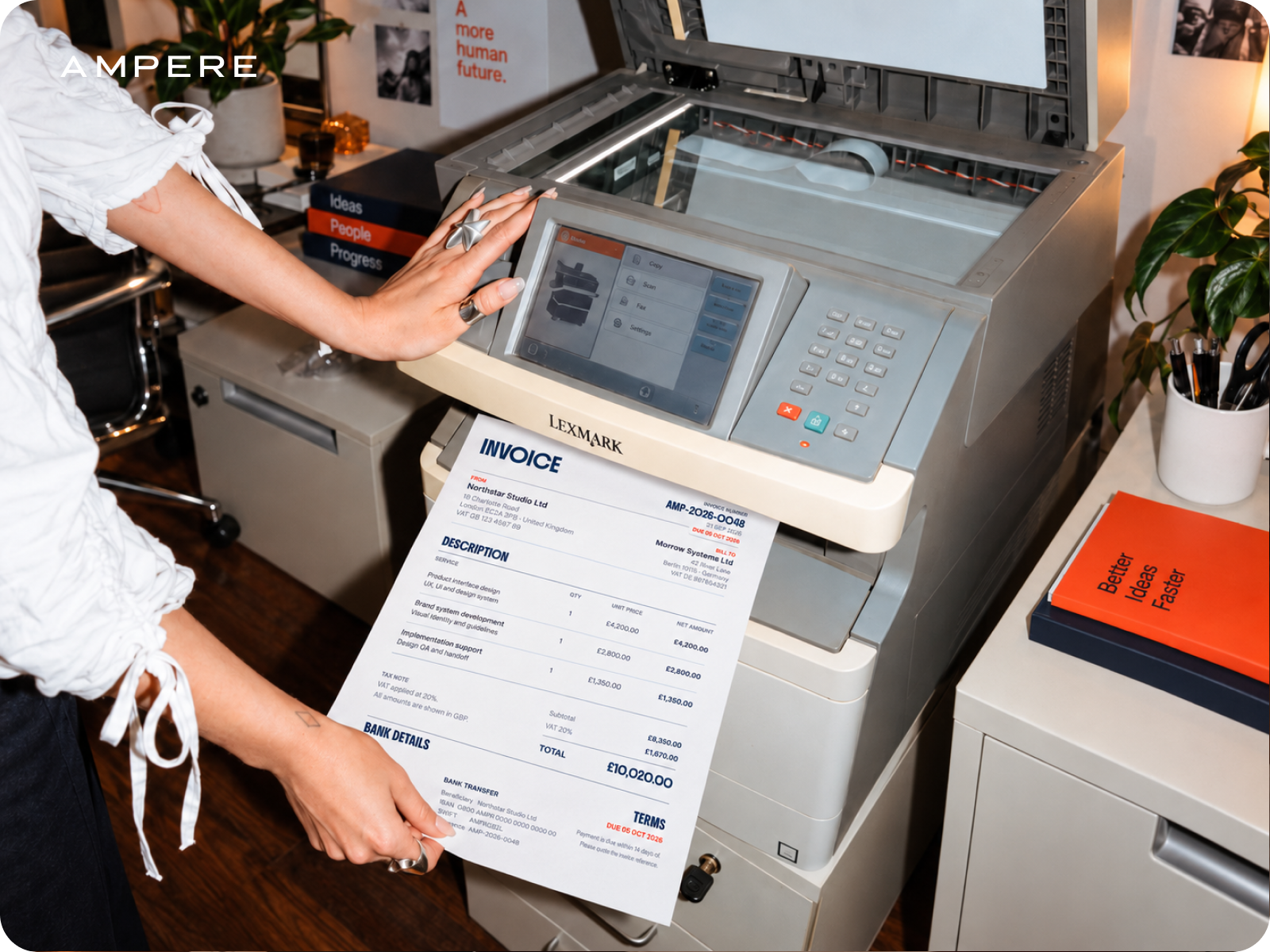
Don’t leave it for the weekly batch, or for whenever you get round to the admin pile. Every day it sits in your drafts is another day added to how long you wait to get paid.
Say you're owed £20,000, due in 30 days and your bills this month are £15,000. Technically you're £5,000 up.
In reality, you're short until that payment clears.
Nobody delays invoicing on purpose, but it just might not feel urgent once the work's finished, so it slides, and the gap gets a little longer.
2.Ask for shorter payment terms
Thirty days is the default because it's the default, not because anyone specifically decided it was the right for your business.
Clients agree to 14 days far more often than you'd expect, especially those who've paid on time before. Worst case they say no, and that costs you nothing but a slightly awkward moment you'll probably forget about by lunch.
Bigger clients often have their own standard terms and zero interest in changing them for one supplier, but you just shouldn’t leave an easy negotiation on the table because asking felt uncomfortable.
3.Offer a small discount for paying early
Trimming two percent off an invoice feels like losing money, until you realize that single invoice is what's standing between you and making payroll.
Quietly offering it to one or two reliable clients during a tight month, and it does its job without becoming something you're stuck offering forever, but run the math first: two percent off a big invoice is cheap. Two percent off a small one barely moves anything, so save it for the payments that matter.
4.Stretch your supplier terms
Paying out slower does the same job, and people ask for it far less often.
A supplier used to being paid in 14 days might agree to 30, especially if you've paid them reliably before. People rarely ask because it feels like begging for a favor rather than doing normal business, but most suppliers would rather adjust a payment timeline than lose a consistent client.
This works best with suppliers who already know and trust the business, not new vendors you hired last week.
5.Bridge that gap with flexible financing
A traditional loan doesn't care whether business is quiet or booming. The same repayment comes out every month regardless, which can turn a short slow patch into its own separate problem.
Some lenders structure things differently: a percentage of revenue instead of a fixed sum, so a slow month costs less to service than a busy one does. Ampere works with lenders offering both types, for card-accepting businesses that have been trading at least three months and hold an Ampere account. Once approved, funds land in your account within two business days.
Apply if a slow month feels more like a short bridge than a long-term problem, and ask specifically about revenue-based repayment if a fixed monthly amount is the part that worries you most.
There's a fuller rundown of funding sources for UK small businesses worth reading if you're weighing up the options.
6.Don't cut costs on autopilot
The obvious move in a quiet month is to spend less, and sometimes that's exactly right. Cut the wrong thing, though, and a slow month turns into a slow year.
Ask a wedding photographer about January and watch their face change. Summer's booked solid, six weddings a month.
Then the calendar flips to winter and the phone stops ringing, not because anyone's stopped getting married, just because nobody books a February wedding six months out. If that photographer pauses advertising in January to save a bit of cash, they're quietly emptying out next June too, since January is exactly when summer's weddings get booked.
The costs worth questioning are the ones that don't touch what happens once business picks back up. Marketing, client relationships, anything with a payoff further down the line, those are usually the wrong place to cut first, even though they're often the easiest line items to point at.
7.Keep a reserve, but know what it's for
A reserve should exist for genuine surprises: a client going under, an unexpected repair, the sort of thing nobody can invoice their way out of. The general rule of thumb is keeping three to six months of expenses aside, built up slowly as a monthly habit.
However, if you are tapping into your cash reserve every single winter just to cover the exact same predictable lull, it’s no longer a safety net. It’s an expensive band-aid covering up a timing issue that your payment terms should be fixing instead.