Corporate Cards vs Expense Claims
If your team's still submitting expense claims at the end of the month, you probably know the drill.
Someone pays for a client lunch or a software subscription out of their own pocket, holds onto the receipt for three weeks, then submits a form that sits in a queue until finance gets round to it. By the time it's approved, nobody quite remembers why the taxi fare was that high.
Finance ends up doing the follow-up work, chasing receipts, matching amounts to the right categories, and hoping whoever submitted the claim kept the invoice.
Where Corporate Cards Change the Process
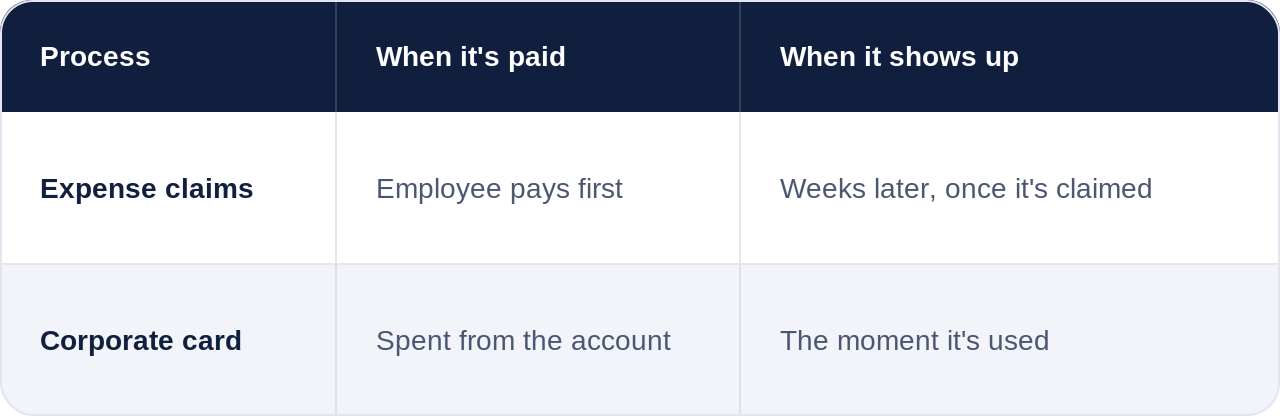
A growing number of UK businesses have swapped this around - instead of paying out of pocket and waiting to be paid back, the person spending the money uses a card tied straight to the business account.
You'll spot these called employee expense cards or company expense cards, depending on where you're looking, but regardless of the name, the idea stays the same-
the spending and the record of it happen at the same moment.
With Ampere, you can issue a corporate card to people across your team. Each card can carry its own limit, so someone booking flights doesn't need the same ceiling as someone ordering office supplies.
If a card needs to stop working right now, you pause it from the app. No phone calls required. Take a look at the Ampere cards page for how it works and set it up.
What It Looks Like Day to Day
Finance teams love this part: a transaction shows up the moment the card's used, so you catch anything odd the same day.
This makes the biggest difference for spending that doesn't sit inside one system already: subscriptions, travel bookings, supplier payments, client meals. Spread across five people, a card each means nobody's fronting the money and waiting to be paid back.
If your team's spending has outgrown what one card and a shared spreadsheet can handle, that's usually the point where switching over is worth the couple of minutes it takes to set up.