Know your worst month before it arrives

Payroll went out this morning, rent is due at the end of the week, and you're doing sums in your head to work out if your biggest client will pay before the VAT bill lands.
Mental maths gets you through a normal month.
A cash flow forecast does the same sums months ahead, so a tight month shows up while you still have time to plan for it.
The forecast is a month-by-month estimate of the money coming into your company and the money going out.
Start from today's balance and work through the months, adding what comes in and taking off what goes out, and you get an expected balance for the end of each month.
The number to look for is the lowest one, because that's your worst month.
A forecast follows cash, which can look very different from profit. A company can have a profitable quarter and still run short, because the money from November's invoices hasn't arrived yet and the tax bill has.
Money coming in
Open a spreadsheet and put the next 12 months across the top. Under each month, list what you expect to come in, from client payments to card sales.
Put each payment in the month you expect the money to land, which is often later than the due date on the invoice. If a client has paid three weeks late on their last few invoices, forecast the next one three weeks late too.
Government research estimates that UK businesses are owed around £26 billion in late payments at any given time, so building in a delay is realistic.
Money going out
Next, list everything that leaves the account.
Regular costs are easy: salaries, rent, software, loan repayments. Big bills that only turn up a few times a year need the most attention.
Tax comes first.
VAT is usually due one calendar month and seven days after the end of each VAT quarter. Corporation Tax has to be paid nine months and one day after your accounting period ends, for companies with taxable profits up to £1.5 million.
Both deadlines follow a fixed pattern, so you can add them to the sheet straight away.
Add the yearly costs too, like insurance renewals and annual software plans, plus any one-off spend you're planning, such as a new equipment or a trade show.
A cash flow forecast example
The cash flow forecast example below is for a small agency that expects to have £9,000 in the account at the start of November. The figures are rounded to keep it simple.
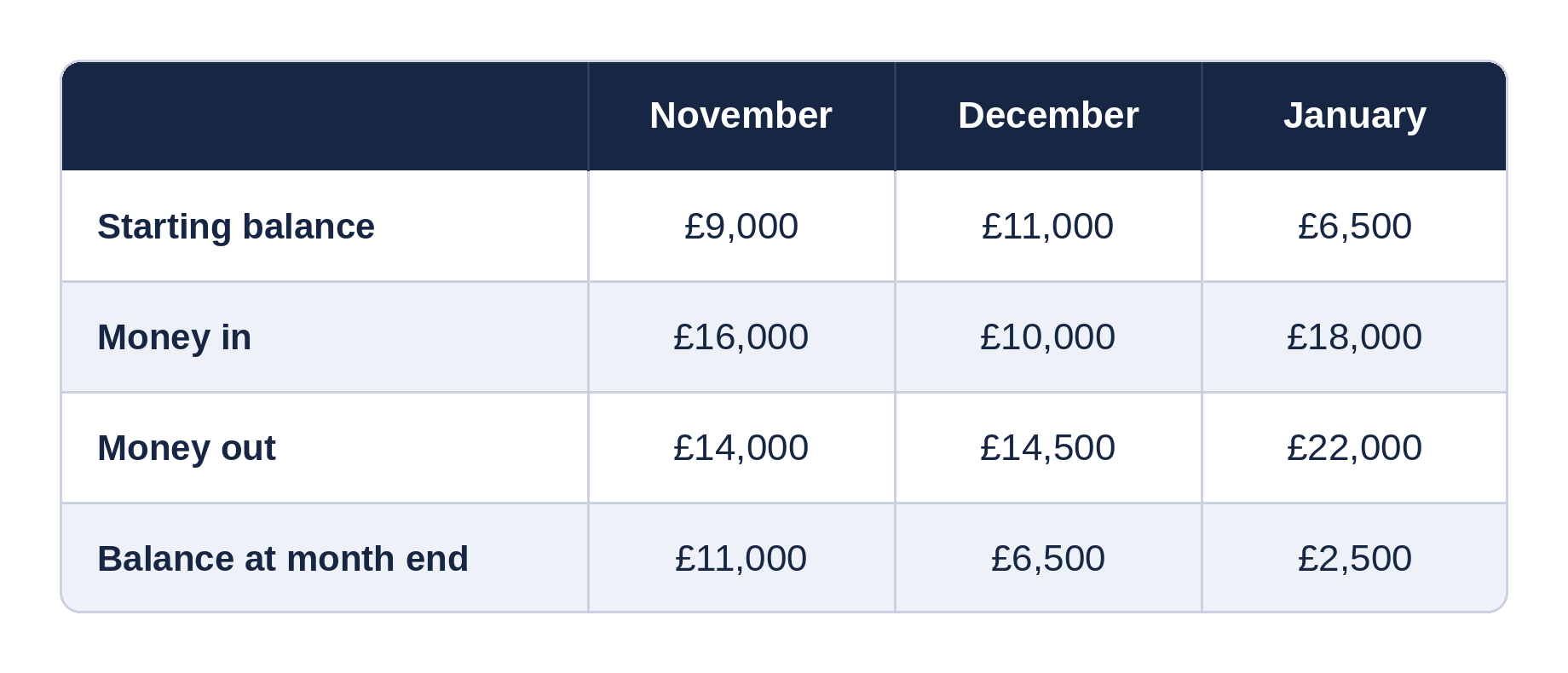
December dips to £6,500 when two clients push their payments into the new year.
January goes lower still. The late payments arrive, so more money comes in than in any other month on the sheet. The quarterly VAT bill is due too, and so is Corporation Tax, because the company's year ends on 31 March and that puts the deadline on 1 January. Around £8,000 of tax leaves the account on top of the usual costs, and the month ends at £2,500.
A £2,500 balance won’t go far for a business spending £14,000 a month.
If this were your agency, you'd spot the January squeeze from October, with three months to do something about it.
When one month looks tight
You've got a few ways to handle it.
Chasing slow payers earlier and asking for deposits on new work both bring money in sooner.
Pushing a planned purchase back a month keeps more of it in the account.
For tax, setting some income aside every month means the January bill comes out of money you've already set apart.
If moving dates around won't close the gap, the forecast gives you time to arrange funding early, while your numbers still look healthy. With an Ampere business account, you can apply for a business loan and get personal offers from Ampere's lending partners, with flexible terms built around your cash flow.
Keep it current
A forecast is only useful while it stays close to reality.
Once a month, replace last month's estimates with the real figures from your account, then add a new month at the end so you're always looking a year ahead.
Good cashflow management comes down to that monthly update. A rough forecast is enough, as long as its lowest month lines up with the lowest month in your account. Check it again after any big change, like winning a large contract or taking on a new hire.
For your worst month, split the forecast into weeks, since a monthly total can hide a bad fortnight when several big payments land close together.
Next payroll day, open the forecast before you start doing sums in your head. If January is going to be tight, you'll have known since October.