Taxpayer Identification Number UK: What It Is and Where to Find Yours

Fourteen fields into a new client's supplier form, everything has gone smoothly.
Company name, registered address, IBAN, contact email... Then comes a box labelled TIN, marked as required.
TIN stands for taxpayer identification number. Many countries issue one main tax number to every person and business, so their forms expect a single TIN from you too. The UK spreads the job across a few tax reference numbers, each with its own name, so the letters TIN rarely turn up on anything from HMRC.
For a limited company, most forms want either the Corporation Tax UTR or the company registration number.
Your company's TIN is its UTR or company number
UTR stands for Unique Taxpayer Reference. It's a 10-digit number HMRC gives your company when it's set up, and some HMRC letters simply call it your "tax reference".
Countries list which of their numbers count as TINs, and the UK's usual picks are the UTR and the National Insurance number.
National Insurance numbers belong to people.
Companies, LLPs and other entities that file a tax return get a UTR, and many forms accept it as the taxpayer identification number UK businesses use. Marketplace forms often want your company registration number instead.
Where to find it
The first copy arrives by post, usually around 15 days after the company is registered.
Plenty of directors open that letter in the busy first weeks, file it somewhere sensible and lose track of it long before a form asks.
After that, the UTR shows up on most things HMRC sends the company, so it's probably sitting on one of these:
- the notice to deliver a Company Tax Return (form CT603)
- the front page of any Company Tax Return you've filed (form CT600)
- payment reminders and other HMRC letters
- your accountant's records, if someone else files your returns
If the letters have vanished and your accountant draws a blank, you can request the Corporation Tax UTR online through GOV.UK.
Your company number is easier to track, since it’s on your certificate of incorporation, and you can find it any time by searching your company name on the Companies House register.
By the end of its first year, a company has collected several reference numbers, and they can blur together when you're copying one into a form.
Your company registration number comes from Companies House. It's 8 characters long and identifies the company on the public register. Many forms ask for it in its own field as your "company number" or "registration number".
VAT registration number only applies if the company is VAT-registered. You'll see it as 9 digits, often with GB in front, on your VAT invoices.
The Corporation Tax payment reference looks the most like the UTR. It's 17 characters, changes with each accounting period, and you use it when you pay Corporation Tax. A TIN box wants the plain 10-digit UTR or your company number, never this one.

Why the TIN box keeps appearing
Lots of countries share details of financial accounts with each other's tax offices, so financial firms and payment providers ask for a TIN, to make sure the report lands with the right tax office.
Online marketplaces collect tax details from sellers for their own reporting, and many overseas clients include a TIN field in supplier onboarding as standard. For many companies, the TIN box first shows up around the time the business starts earning from abroad.
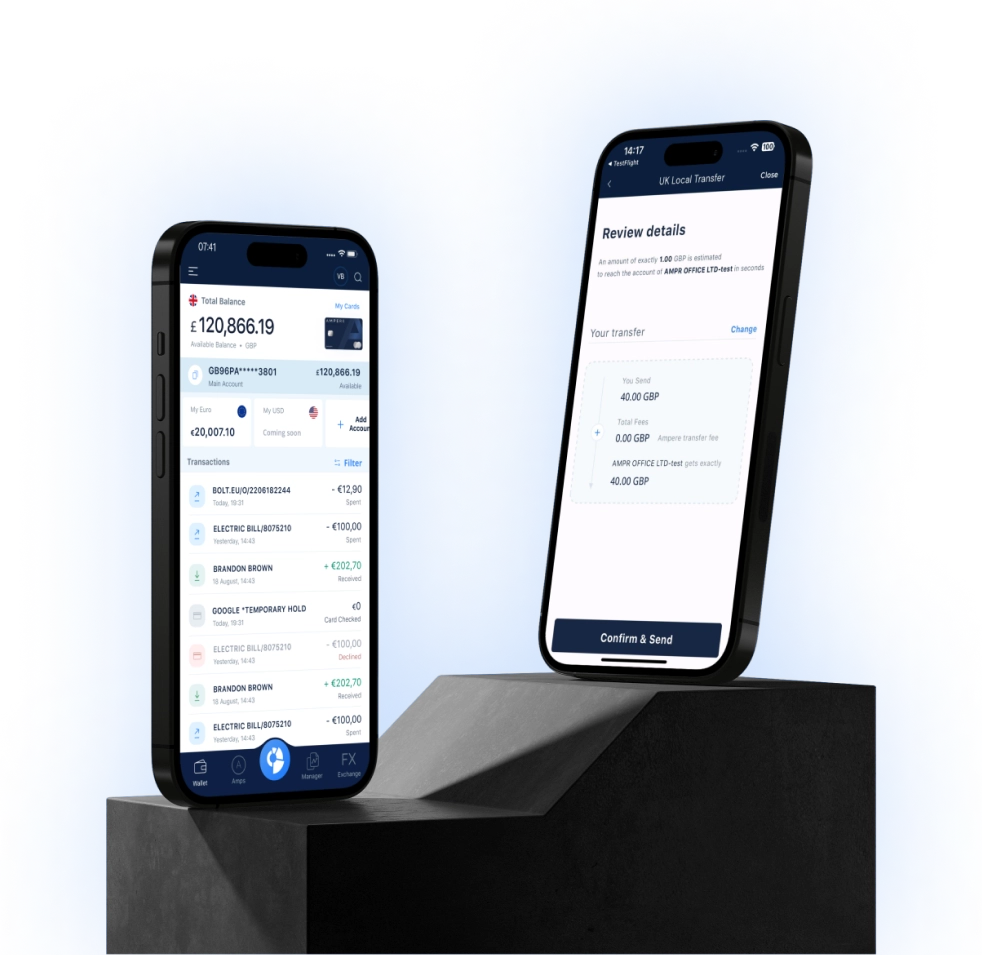
When clients abroad start paying you, it helps to have an account that keeps up. Open your Ampere business account online, and once you're approved, you'll have UK and euro account details ready for the next client form that asks.
So what is my TIN number? UK directors usually have more than one answer, because the company and the person running it each have their own tax record.
The company's TIN is its Corporation Tax UTR or company number, depending on the form.
Your personal TIN is usually your National Insurance number, and if you've registered for Self Assessment you'll have a personal UTR as well. Both UTRs are 10 digits long, which makes them easy to swap by accident.
Check who the form is about before you type. Supplier forms and business platforms want the company's numbers, and anything about you personally, like a tax residency question on your own investment account, needs yours.