Sole Trader or Limited Company? What’s the difference

Most people start out as sole traders because it's the quickest way to get going. Then the work picks up, and the sole trader vs limited company question comes up.
The answer matters.
It decides what happens to your house if a client sues, how much HMRC takes, and when the money in your account becomes yours.
As a sole trader, you and the business are the same legal entity.
Any contract or debt the business takes on is yours personally.
If the business can't pay a supplier or loses a legal claim, creditors can come after your personal savings and even your house.
A limited company is a separate legal entity.
It's incorporated at Companies House with its own name and its own tax liabilities.
You become a director and usually a shareholder, running a business that exists separately from you, so if the business can't pay its debts or loses a legal claim, creditors can usually only go after what the company owns.
Lenders and landlords may still ask for a personal guarantee when you borrow money or lease premises.
A dedicated business account keeps company money separate from yours as soon as your company is set up, so your records and your director's loan account stay easy to follow.
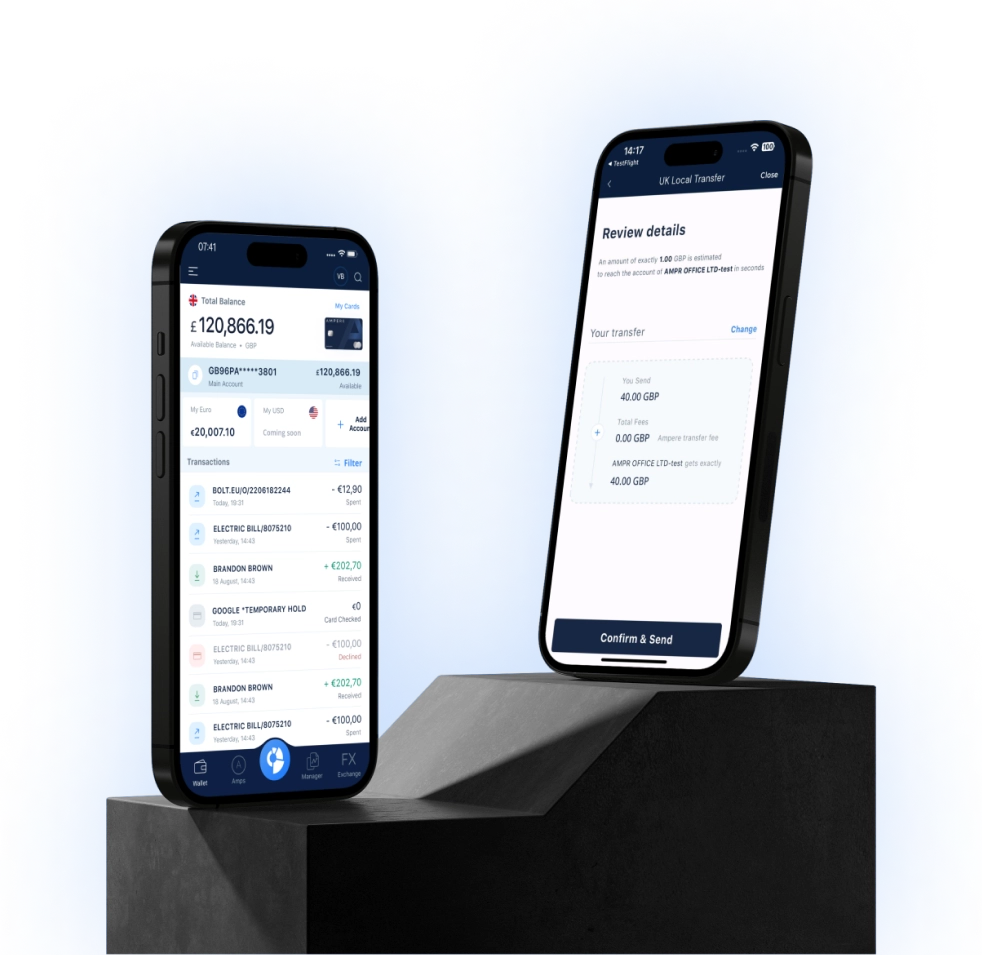
Ampere's business account is built for UK-registered LTD, LLP and LP companies, with GBP and EUR accounts and cards you can give a co-director with their own spending limit. Open your Ampere business account.
The biggest difference between sole trader and Ltd company shows up in your tax bill.
Sole trader profit is taxed as personal income through Self Assessment. In England, Wales and Northern Ireland, that means:
- nothing on the first £12,570,
- 20% up to £50,270,
- 40% up to £125,140, and 45% above that.
- Class 4 National Insurance adds 6% on profits between £12,570 and £50,270, and 2% above it.
Whatever's left after that is already yours, and you can take out what you need, when you need it.
A limited company pays corporation tax on its profits first, before any of it reaches a director's pocket. For 2026/27, that's:
- 19% on profits up to £50,000
- An effective rate that climbs gradually from 19% to 25% on profits between £50,000 and £250,000
- 25% on profits over £250,000
What's left belongs to the company until a director extracts it, typically as a salary through PAYE plus dividends on top.
Dividend tax runs at 10.75% for basic rate taxpayers, 35.75% for higher rate, and 39.35% for additional rate, above a £500 tax free dividend allowance.
The paperwork
Registering as a sole trader is free and takes a few minutes on GOV.UK, though you need to do it by 5 October following the end of the tax year you started trading, or HMRC may charge a penalty for registering late.
After that, it's one Self Assessment return a year, and if your self-employed income (plus any rental income) is over £50,000, you also send HMRC short quarterly updates.
A limited company needs incorporating first, at £100 for digital incorporation through Companies House.
After that, it carries its own ongoing filing: an annual confirmation statement at £50 online, statutory accounts every year, and a corporation tax return (the CT600), and whatever personal return the director files.
VAT registration works the same regardless of structure.
Once your taxable turnover passes £90,000 over any 12-month period, you register for VAT and charge the standard 20% rate on most of your sales.
Some freelancers and small operators stay sole traders for years, while others incorporate early, once profit climbs high enough, or because a client, a lender, or their own risk appetite pushes them to.
The numbers land differently for every business, so you should run them against your own profit and plans.